
From Forecast-Driven Production to On-Demand Manufacturing: How Flexible Supply Chains Are Reshaping Business and Sustainability
This article is written from the perspective of a garment factory owner in China, working closely with fashion brands and designers on small-batch, fast-response women’s wear production.
The global fashion industry is undergoing a profound transformation.
On one side, there are mountains of unsold inventory and massive resource waste. On the other, consumers are demanding greater individuality, faster response, and stronger environmental responsibility.
Against this backdrop, small-batch customization is no longer just an order-taking model. It is emerging as a future-oriented business strategy that aligns commercial success with sustainability.
The Pain Point of the Traditional Model: A Gamble on Forecasting
For decades, most fashion brands have relied on a forecast–produce–distribute model.
Production decisions are often made six months or more in advance, based on trend predictions rather than real demand. When forecasts miss the mark, the consequences are severe:
- Excess inventory
- Heavy discounting
- Financial loss
- Enormous environmental burden from wasted materials and energy
In this system, overproduction is not an exception — it is built into the model.
The Future Value of Small-Batch Customization: Agility and Precision
1. Business Agility: Test First, Scale Later
Small-batch customization allows brands to test the market with minimal quantities, often starting at 100 pieces per style.
By combining pre-orders, community feedback, and real-time sales data, brands can make informed decisions about whether to scale production.
This approach significantly reduces:
- Startup risk
- Cash flow pressure
- Inventory exposure
For emerging brands, it transforms growth from a gamble into a measured, data-driven process.
2. Meeting the Demand for Personalization
Today’s consumers are increasingly fatigued by mass-produced fast fashion.
Small-batch production enables brands to:
- Serve niche audiences
- Launch limited collections
- Offer subtle design or fit adjustments
Rather than competing on volume, brands compete on distinct identity and emotional connection — something mass production struggles to deliver.
3. Sustainability at the Core: Reducing Waste at the Source
This is where small-batch customization creates the greatest social and environmental value.
On-demand production and sell-then-produce models dramatically reduce waste caused by overproduction.
Every meter of fabric and every finished garment is produced because it is needed, not because it was predicted.
Sustainability, in this context, is not a marketing slogan — it is a structural outcome of a smarter supply chain.
Our Role as a Factory: A Critical Link in the Sustainable Chain
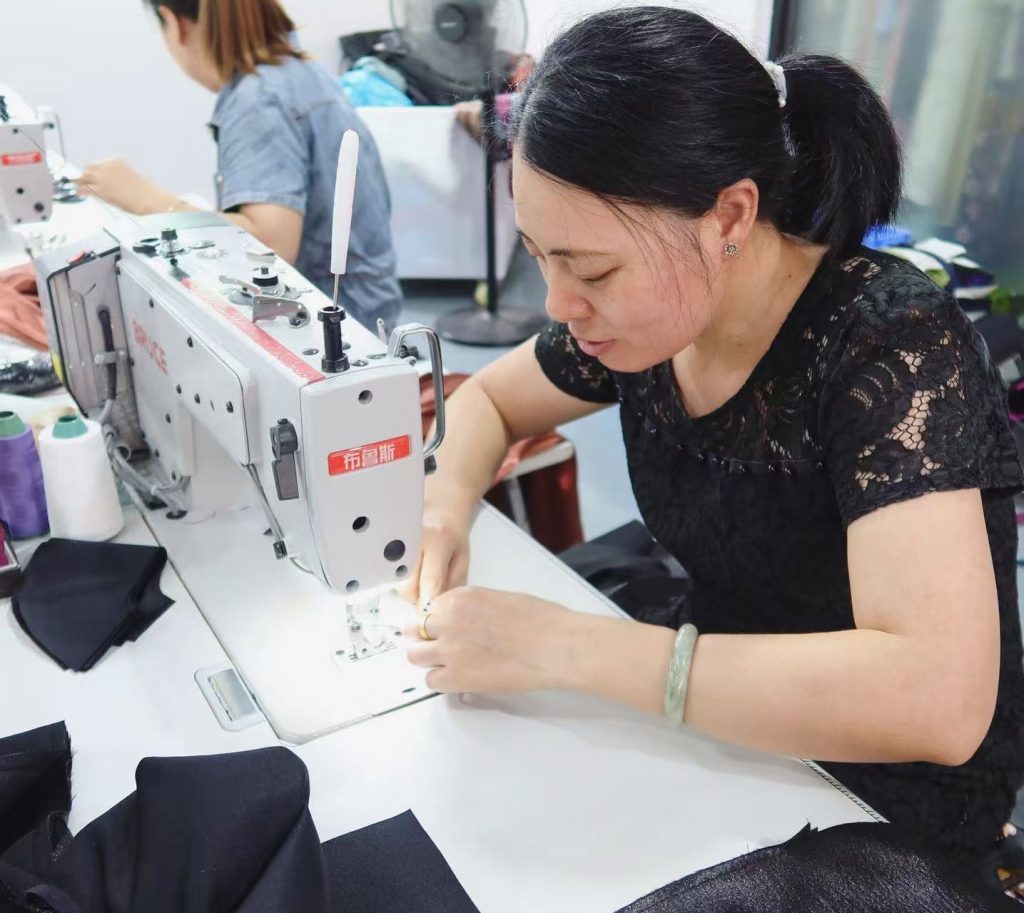
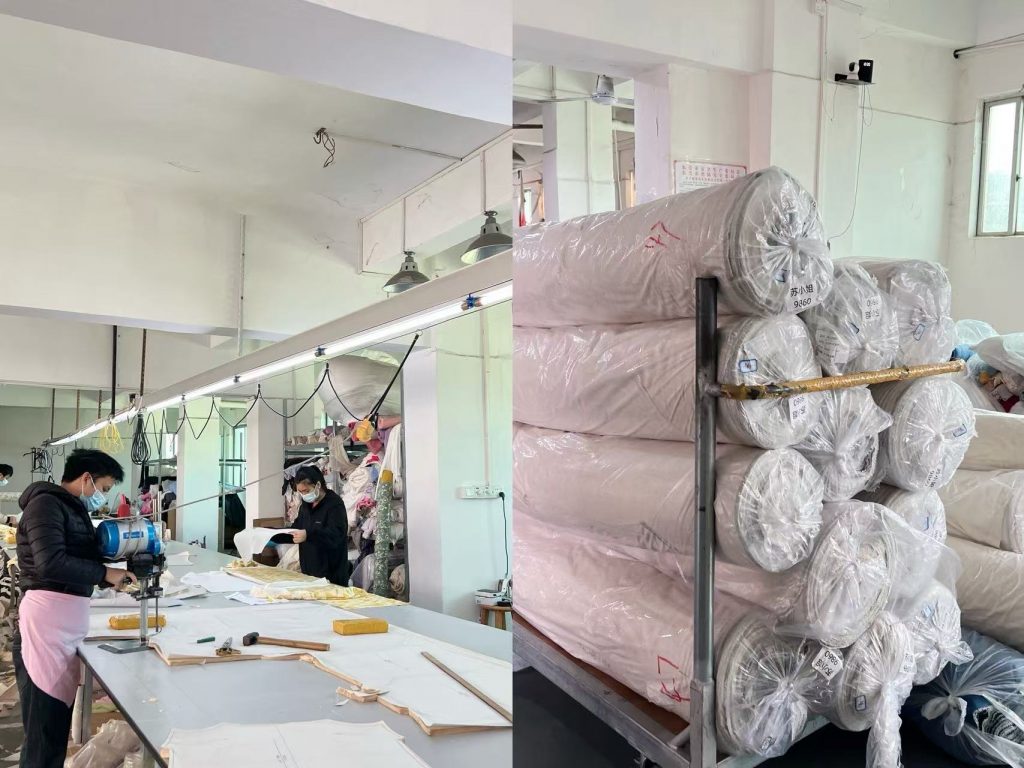
As a garment factory specializing in small-batch, fast-turnaround women’s wear, we see ourselves as infrastructure for this future model.
- Through flexible production lines and streamlined management, we make low-MOQ production economically viable and operationally efficient.
- Our sampling (usually 7–14 days) and bulk production (usually 4–5 weeks) timelines empower brands to iterate quickly, test ideas, and respond to real demand. Simple styles such as T-shirts and camisoles without printing or embroidery can be sampled in 7 days.
- By working with sustainably focused fabric suppliers, we offer clients more responsible material choices without compromising performance or aesthetics.
Factories are no longer just executors — they are enablers of better business logic.
Conclusion: Choosing Small-Batch Customization Is Choosing the Future
Choosing small-batch customization today means choosing:
- A smarter, more resilient business model
- A closer relationship with real consumers
- A more responsible approach to environmental impact
It is not just a production decision — it is a long-term strategic choice.
We believe the future of fashion will be more flexible, more distinctive, and more sustainable. We look forward to working with forward-thinking brands to turn these values into reality through the supply chain.
Are you rethinking the sustainable future of your brand?
We welcome the opportunity to explore how your ideas can be brought to life through an agile, responsible manufacturing approach.
👉 [Discuss a Sustainable Collaboration]
👉Explore a More Responsible Supply Chain
Small batch is a system, not just a small order
Small-batch production only reduces waste if the whole process is built for it: sampling first, then a small run, then a reorder of what actually sells. A factory that runs small batches on a bulk-production line — with long changeovers and large fabric minimums — will quietly push the quantity back up, and the waste comes back with it.
The system works when each step is sized to the order: pattern and grading for the styles being made, fabric bought for the run rather than for a forecast, and QC at the same standard as a large order. Every piece is checked to the agreed standard, whether the order is 100 pieces or 1,000.
Where the waste actually comes from
Most waste in fashion does not come from cutting. It comes from producing the wrong styles in the wrong quantities: a full collection made before any customer has seen it, sizes nobody ordered, and colors that did not sell. Overproduction is built into the forecast model, not into the sewing.
Small-batch production attacks exactly that waste. Test three to five styles at 80–100 pieces per style per color, watch what sells, and put the next order behind the winners. The fabric and trims for the styles that did not sell were never bought in bulk — that is where the saving happens.
What to ask a factory about sustainability
Sustainability claims are easy to print and hard to verify, so ask for the process instead of the slogan. How does the factory handle fabric leftovers? Can it source stock fabric from one batch, so the sample and the bulk order match without a new dye lot? What happens to a style that does not sell — can the fabric be reused for another style?
Also ask about the practical side: sampling usually takes 7–14 days, bulk production usually takes 4–5 weeks, and the minimum is 80–100 pieces per style per color, with some styles from 50 pieces. A factory that answers these questions plainly is easier to build a responsible supply chain with than one that only talks about values.
Working with Laiwen Clothing
Laiwen Clothing is a low-MOQ OEM/ODM garment manufacturer in Humen, Dongguan, making womenswear, childrenswear, and family wear for startups and small brands. Our minimum is 80–100 pieces per style per color, with some styles from 50 pieces; sampling usually takes 7–14 days and bulk production usually takes 4–5 weeks. Send your designs, fabric direction, and quantity per style and color to [email protected] or WhatsApp Lily on +86 13392371667, and we will review your collection plan and explain the most realistic small-batch route for your order.
