
When a new fashion brand begins its journey, finding the right dress manufacturer for startups is the first and most critical hurdle. One of the most critical questions a founder can ask is: “Are you a direct factory or a trading company?”
For startup dress brands focusing on structured silhouettes, tailored womenswear, or premium occasion wear, this distinction isn’t just a detail—it’s the difference between a successful launch and a production nightmare. At Laiwen Clothing, we’ve seen how factory-direct partnerships empower founders to turn sketches into market-ready collections.Contact Garment Manufacturer in China
Get A Quote For Your Collection Today
1. Direct Communication: The Key to Technical Precision
Most startups face “communication lag” when working with middleman reps. In the world of custom dress manufacturing, details get lost in translation.
When you work directly with an OEM/ODM dress factory, you bypass the filter. You aren’t just talking to a salesperson; you are communicating with the team responsible for:
- Pattern Making: Ensuring the 2D sketch translates into a 3D fit.
- Technical Design: Discussing whether a peplum needs horsehair braid for structure or if a hidden zipper is viable in a specific fabric.
- Fabric Sourcing: Real-time feedback on weight, drape, and composition (e.g., choosing between heavy crepe or bonded satin).
2. Why Structured Dresses Demand “Factory-Floor” Expertise
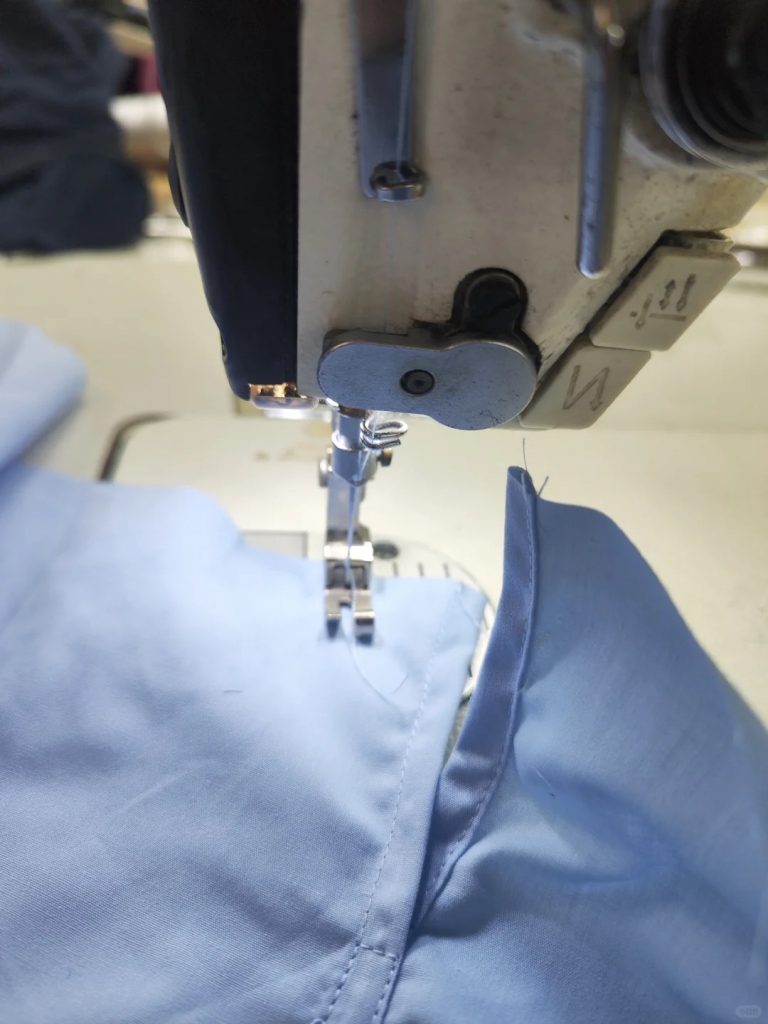
Unlike basic t-shirts or hoodies, structured dresses (fitted waists, boning, decorative panels, or intricate draping) require high-level garment construction.
A direct factory partner provides immediate answers to complex development questions:
- Internal Construction: Does this silhouette require lining, interfacing, or stay tapes to maintain its shape?
- Fabric Behavior: How will this specific woven fabric react to princess seams?
- Fit Correction: Direct access to sample makers allows for faster iterations on “fit samples,” reducing the time from prototype to PPS (Pre-Production Sample).
3. Transparency in Material Sourcing (No “Cheap” Surprises)
One of the biggest complaints from startup founders is receiving samples made from “cheap material” that doesn’t match their vision.
A professional China clothing manufacturer acts as a consultant. Instead of just saying “yes” to every request, we discuss the GSM (grams per square meter), stretch recovery, and durability of the fabric. For a premium brand, the “feel” of the fabric is as important as the look. By working with a factory, you get direct access to fabric libraries and mill connections, ensuring your private label dresses stand out in the market.
4. The Reality of Low MOQ and Scalability
Many startups search for “Small MOQ clothing manufacturers” (Minimum Order Quantity). While trading companies might promise low MOQs by outsourcing to unregulated workshops, a real factory like Laiwen Clothing manages small batches (e.g., 50–100 pieces) through efficient production planning.
Why this matters for your brand:
- Consistency: The same team that makes your sample makes your bulk.
- Quality Control: In-house QC teams monitor every stitch, ensuring your first 50 pieces are as perfect as your next 500.
- Long-term Growth: As your brand scales, a factory partner can adjust lines to accommodate larger volumes without you having to find a new supplier.
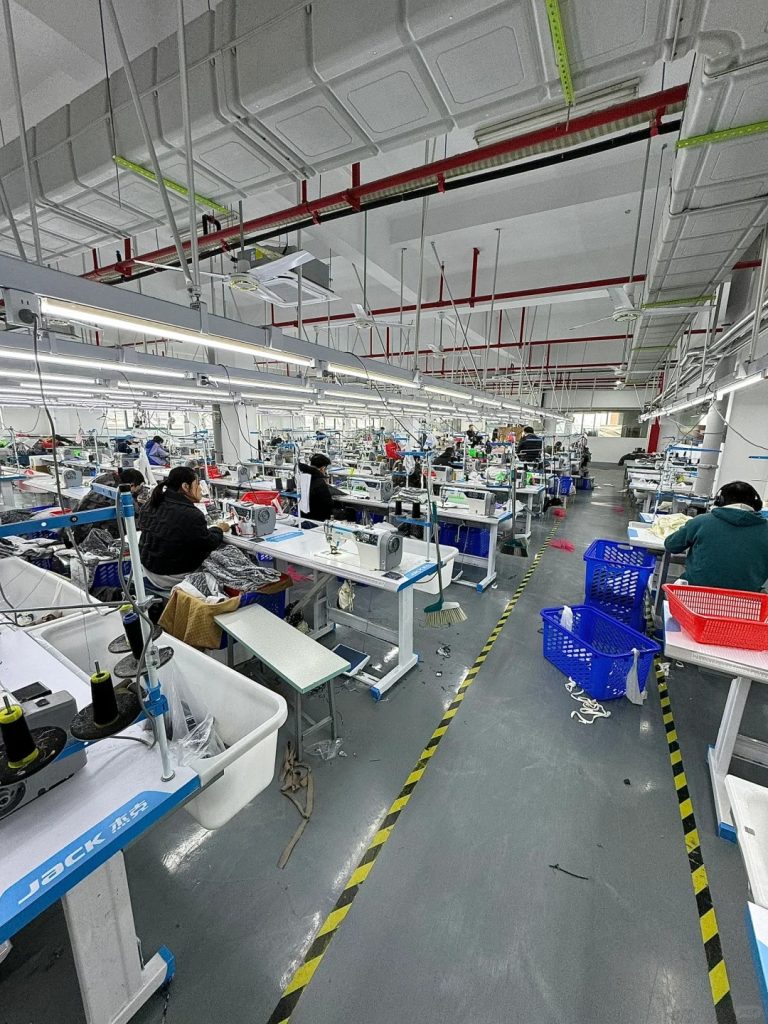
Custom dress manufacturing process at Laiwen Clothing factory
5. From Tech Packs to Production: What Startups Should Prepare
To get the most out of your factory partnership, come prepared. This makes you a “high-value client” even as a startup.
- Tech Packs or Detailed Sketches: Include measurements and construction notes.
- Inspiration/Reference Samples: Physical garments or high-res photos.
- Fabric Direction: What is the desired hand-feel and weight?
- Target Price & Quantity: Be transparent about your budget to help the factory suggest the best materials.
What factory-direct should look like in practice
“Direct factory” should mean something you can check, not just a claim on a website. In practice, it means you talk to the team that makes the decisions: the pattern maker who reads your sketch, the person who sources the fabric, and the person who checks quality before shipment. It means the same team that makes your sample makes your bulk order, so the fit and construction you approved are the ones that go into production.
It also means you can see the work: ask for a video call or a factory visit, arranged in advance, and ask to see the sample room and the production floor rather than a showroom of finished garments.
Structured dresses: what to confirm in the first sample
Structured dresses — fitted waists, boning, decorative panels, intricate draping — depend on internal construction that a photo cannot show. In the first sample, confirm the lining, interfacing, and stay tapes that hold the silhouette, and check how the fabric behaves at the princess seams and the closure. A heavy crepe and a bonded satin may look similar in a photograph and behave very differently when cut and sewn.
Fit is the other half. A structured dress usually needs a second fit sample, especially for tailored pieces: the first sample confirms the silhouette and construction, the second confirms the corrected fit. Budget for that second round in the sample fee and the timeline.
From first sample to first order
The step from sample to bulk has three decision points. First, fit approval: the sample is approved against the agreed brief, with measurements, worn photos, and one organized feedback record. Second, fabric confirmation: the exact material, color, and repeat availability are confirmed, because a few meters for sampling does not establish availability for production. Third, quantity per style and color: the minimum is 80–100 pieces per style per color, with some styles from 50 pieces, and sizes can be split within one color.
Once those three are confirmed, bulk production usually takes 4–5 weeks. Fabric is inspected before cutting, quality is checked during sewing, and a final inspection happens before packing. Bulk is quoted mainly EXW, so shipping is arranged separately, and the exact freight is confirmed after production and packing.
Working with Laiwen Clothing
Laiwen Clothing is a low-MOQ OEM/ODM garment manufacturer in Humen, Dongguan, making womenswear, childrenswear, and family wear for startups and small brands. Our minimum is 80–100 pieces per style per color, with some styles from 50 pieces; sampling usually takes 7–14 days and bulk production usually takes 4–5 weeks. If you are starting a dress brand, send your sketches or tech pack, fabric direction, and quantity per style and color to [email protected] or WhatsApp Lily on +86 13392371667, and we will review the designs and discuss the development steps with you.
FAQ: Manufacturing for Startup Fashion Brands
Q1: Is it always cheaper to work with a direct factory than a trading company?
Generally, yes. You eliminate the middleman’s commission. However, the real value is in the reduction of “hidden costs” caused by sampling errors and production delays.
Q2: Can I start with just 50 pieces per style?
Our usual minimum is 80–100 pieces per style per color, and some styles can start from 50 pieces. At Laiwen Clothing, we support startup brands with flexible MOQs, provided the development logic is sound and the fabric is accessible.
Q3: How long does the sampling process take for a structured dress?
Typically, 7–14 days depending on fabric availability and design complexity. Tailored pieces may require a second fit sample to ensure the silhouette is perfect.
Q4: Do I need to provide my own fabric?
You can, but most brands prefer to use our fabric sourcing services. We help find the best materials based on your design requirements and price point.
Conclusion: Build Your Brand on a Solid Foundation
For a startup dress brand, your manufacturer is your most important silent partner. Choosing a factory-direct relationship ensures that your creative vision isn’t diluted by middleman communication. You get better quality, honest technical feedback, and a partner invested in your long-term growth.
Ready to bring your dress designs to life?
[Contact Laiwen Clothing Today] for a professional consultation on your next collection. We specialize in OEM/ODM services for premium womenswear with a focus on quality and consistency.
Get a Quote for Your Collection
View Our Manufacturing Capabilities
