
A clothing manufacturer from sketches can often develop a sample from a drawing or reference photo. The image is a starting point, though: it does not specify every measurement, fabric property or internal construction detail. The closer your brief comes to explaining those choices, the more accurately the first sample can reflect your intended design.
At Laiwen Clothing, we develop custom women’s and children’s garments through fabric sourcing, pattern making, sampling and production. Here is what helps the process run smoothly.
What can a factory understand from an image?
A clear front and back view can show the general silhouette, neckline, sleeves, pockets, seams and decorative details. It may not reveal the garment’s exact length, ease, lining, closure, seam finish or fabric composition. Two garments that look similar in photos can require very different materials and construction.
Mark the details that are essential to your design. If a photo shows a feature you do not want, point that out too. For AI-generated references, some shapes or lace effects may need a practical test before anyone can promise a close physical result.
What to send a clothing manufacturer from sketches
For a useful first review, send:
- Clear front, back and detail images or a tech pack.
- A size chart, intended fit and sample size; include the model’s height where length matters.
- Preferred fabric composition, weight, stretch, hand feel and color.
- Required trims, print or embroidery artwork, labels and packaging.
- Estimated order quantity by style and color, target market and desired timing.
For a children’s style, include the intended age or height range, how the garment should fit, and any functional detail that needs testing. For women’s trousers or fitted dresses, identify where the waist, hip, knee or flare should sit; simply shortening a standard pattern may not deliver the intended petite proportions.
You do not need every technical answer at the outset. Tell us which details are fixed and which are open to development.
How does the first sample take shape?
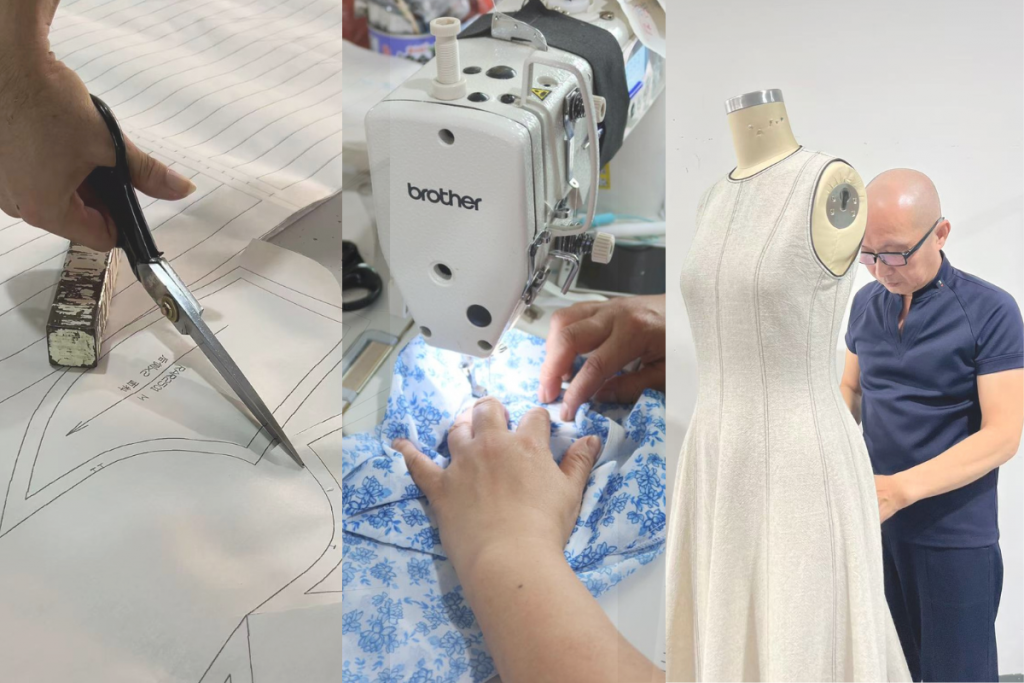
The team reviews the design, recommends suitable materials and develops a pattern. A fabric with the right appearance may still behave differently when stretched, lined or washed. Confirm the selected material in a physical sample before finalizing bulk specifications. The sample then shows how the selected fabric and construction work together. Fit comments should be specific: for example, “raise the knee position” or “reduce the sleeve width by 2 cm” is more actionable than “make it more premium.” Photos of the sample worn from the front, side and back are especially helpful.
Changes to one measurement may affect others. For a trouser, adjusting the rise can change the seat and thigh fit. For a dress, changing the chest can affect the waist and hem balance. Pattern grading for the full size range is discussed after the base fit is approved.
When can the factory give a firm bulk price?
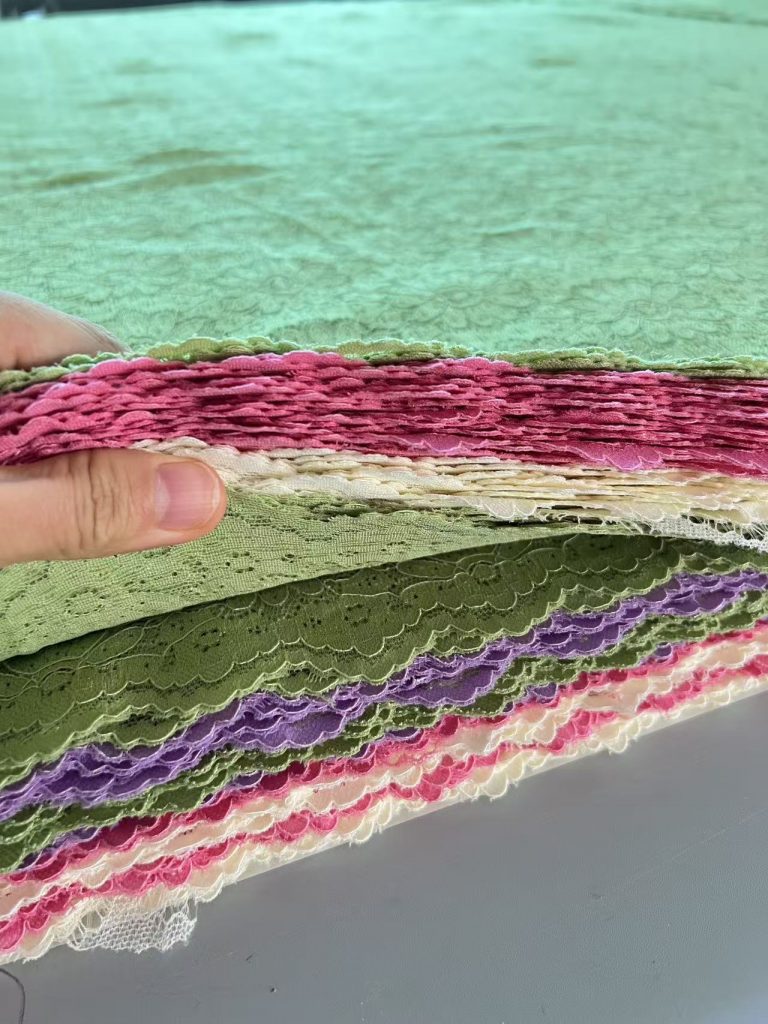
The price depends on the selected fabric, consumption, construction, trims, size range and quantity. An early estimate can guide your budget, but a firmer quotation follows confirmation of the sample and materials. Sample charges and production terms are quoted according to the actual style.
To begin, send Laiwen Clothing one priority design, your preferred sample size and the quantity you expect to produce per style and color. We can identify the missing specifications and advise on the next development step.
Start with your first design
Send your sketch or reference photos, sample size, fabric preferences and estimated bulk quantity per style and color to [email protected]. You can also message Laiwen Clothing on WhatsApp at +86 13392371667/strong>. We will review the design and identify the specifications needed to develop a sample.
The measurements a sketch cannot show
A sketch shows the idea. It rarely shows the numbers that decide whether the sample fits. Before sampling, add the measurements the pattern maker actually needs: the intended length, the key circumferences (bust, waist, hip), and where the waist, knee, or flare should sit. For trousers and fitted dresses, say where the waistband sits on the body; simply shortening a standard pattern does not deliver petite proportions.
Also state the fit intention in plain words — fitted but not tight, relaxed with drape, close at the waist and full at the hem. A photo of a similar garment worn, with the model’s height noted, is often more useful than a second sketch.
When a physical reference garment helps most
A reference photo is enough to start most styles. A physical reference garment is worth sending when the design depends on something a photo cannot show: the weight and hand of the fabric, the way a collar sits, the stretch and recovery of a knit, or the exact drape of a skirt. If you have a garment that fits the way you want yours to fit, send it — the pattern team can measure it directly instead of estimating from a picture.
For children’s styles, a physical sample is even more useful, because age labels are not measurements. Send the intended height range and the sample size with the garment, so the fit discussion starts from real numbers rather than a label.
How to give fit feedback the pattern team can use
When the first sample arrives, try it on and photograph it worn from the front, side, and back. Then write one organized feedback record: each point with the current measurement and the requested measurement, and a note on whether it is fit, construction, or a new design idea. “Raise the knee position by 2 cm” can be actioned; “make it more premium” cannot.
Send the feedback as one record, not as several messages over several days. If two people review the sample, combine their comments first, so the pattern team is not revising from contradictory instructions. A factory-caused correction and a new design request are different situations, so we confirm how a revision changes the fee and the timing before the work begins.
Working with Laiwen Clothing
Laiwen Clothing is a low-MOQ OEM/ODM garment manufacturer in Humen, Dongguan, making womenswear, childrenswear, and family wear for startups and small brands. Our minimum is 80–100 pieces per style per color, with some styles from 50 pieces; sampling usually takes 7–14 days and bulk production usually takes 4–5 weeks. Send your sketch or reference photos, sample size, fabric preferences, and estimated bulk quantity per style and color to [email protected] or WhatsApp Lily on +86 13392371667, and we will review the design and identify the specifications needed to develop a sample.
Frequently asked questions
Do I need a complete tech pack?
It helps, but sketches and clear references can be enough to start a development discussion. Measurements and construction details will still need to be agreed before production.
Can you copy an AI-generated garment exactly?
An AI image may contain details that do not translate directly into fabric and sewing. We can assess the reference and test important effects in a physical sample, but should not promise an exact result before that work.
Can I approve bulk production from a photo alone?
A physical sample is the best way to check fabric, fit, comfort and finishing before a bulk order.
