
Understanding the clothing sample development cost is a crucial step for any fashion brand or designer partnering with a factory. One of the most common questions we hear at Laiwen Clothing is: ‘Why is the sample price so much higher than the bulk unit price?
If you are working with a custom apparel manufacturer for the first time, seeing a sample fee that is 3x to 5x the estimated production cost can be surprising. However, from a factory’s perspective, a sample is not just “one piece of clothing”—it is the entire R&D (Research and Development) phase of your product.
Understanding the difference between clothing sample development cost and bulk clothing production cost is essential for realistic budgeting and a healthy partnership with your supplier.
1. Understanding the True Clothing Sample Development Cost
In bulk clothing production, the “hard work” of figuring out the garment has already been done. The process is streamlined because:
- The pattern is finalized and graded.
- The fabric and trims are approved and in stock.
- The sewing line is organized for repetitive efficiency.
In contrast, clothing sample development is a process of trial and error. A single sample requires:
- Technical interpretation of your design or tech pack.
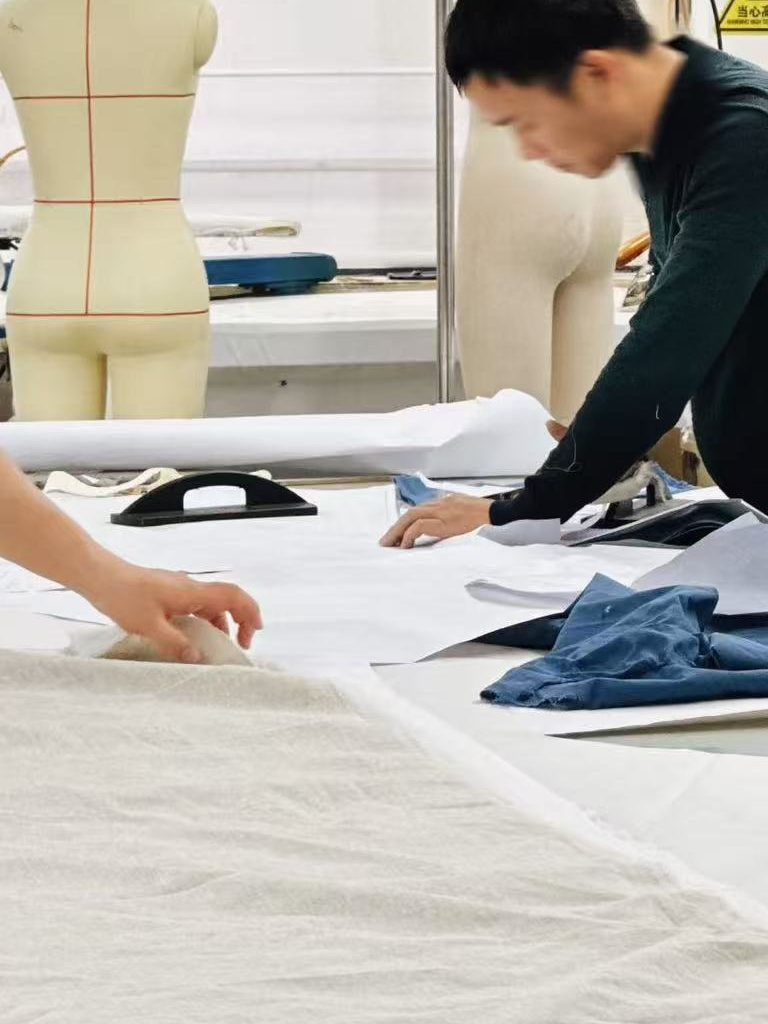
- Pattern making from scratch by a skilled pattern master.
- Sourcing small quantities of fabric and matching trims.
- Internal testing, cutting, and specialized sewing.
- Multiple reviews and corrections to ensure the fit is perfect.
This is why garment sample cost cannot be calculated by a simple unit-price formula; it is a service-based cost involving highly skilled labor.
2. Why Fabric Costs Are Higher in Sampling
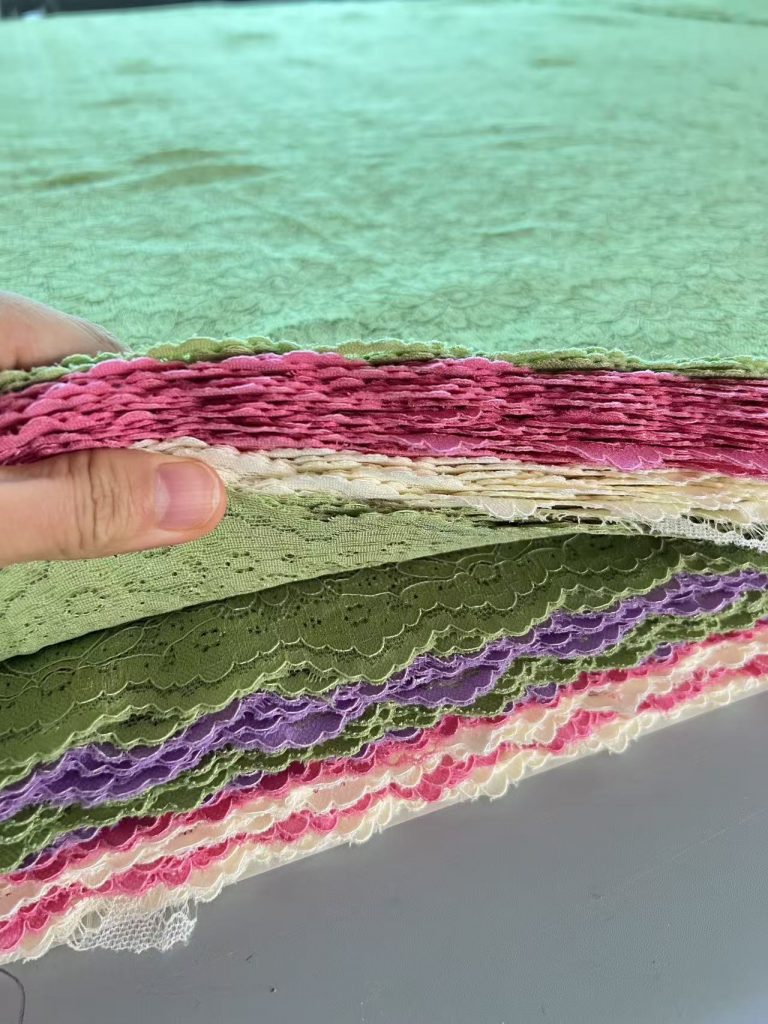
Fabric sourcing is a major factor in the sample price vs bulk price gap. For bulk orders, factories buy rolls of fabric at wholesale prices. For samples, we often face these challenges:
- Surcharge for Small Yardage: Fabric suppliers often charge “cut-piece” premiums for buying only 2-5 meters.
- Waste Factor: To get the best part of a specific fabric or to test how a material reacts to washing/dyeing, more fabric is often consumed than what is actually on the garment.
- Specialized Processing: For materials like linen blends, washed denim, or embroidered bases, the cost to set up a machine for just one piece is significantly higher than for a thousand pieces.
3. Labor Costs: Efficiency vs. Craftsmanship
In a bulk production environment, workers repeat the same specific task (like sewing a sleeve) hundreds of times, reaching maximum efficiency.
In the sample room, a single tailor often sews the entire garment from start to finish. This requires:
- Careful study of the design details.
- Manual adjustments for difficult seams or complex structures.
- Constant communication with the development team.
- High-level finishing to meet presentation standards.
For private label clothing samples involving structured coats, intricate lining, or complex pleating, the labor hours required for one sample can often equal the labor time of 10+ bulk pieces.
4. Complexity: The “Invisible” Costs of Simple Designs
A common misconception in custom apparel manufacturing is that “simple” designs should be cheap to develop. However, minimal designs often require the highest precision.
- Fit & Balance: A simple wrap dress or a draped silk top requires multiple pattern iterations to ensure it hangs correctly.
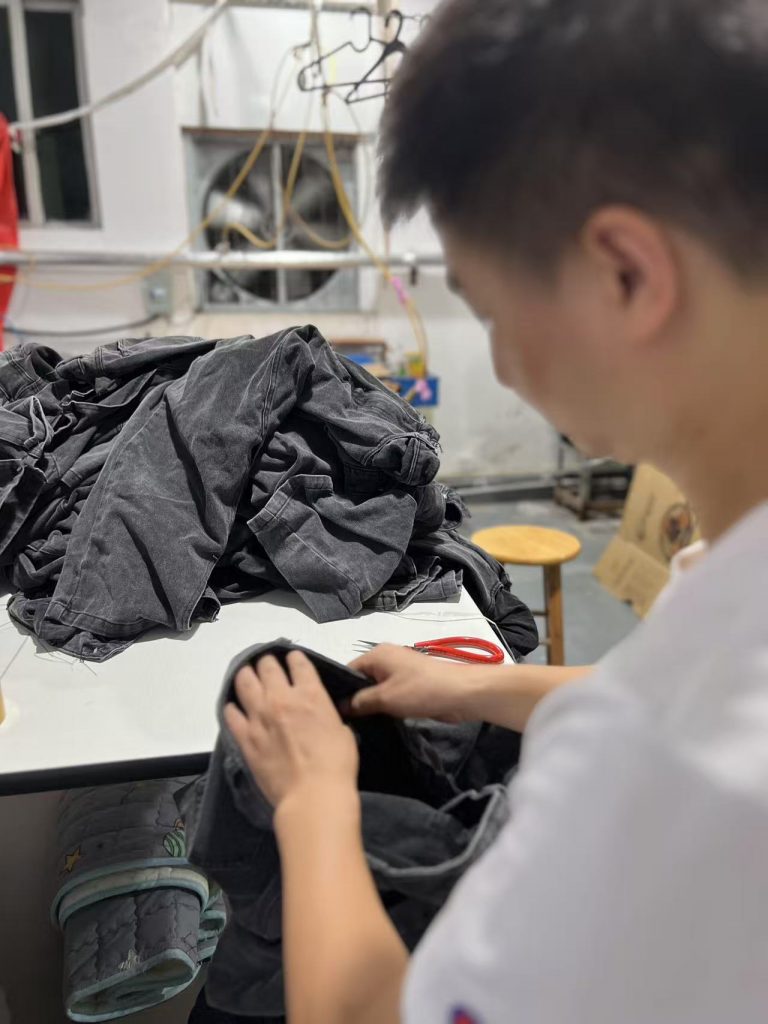
- Technical Risk: Processes like denim washing or garment dyeing can change the size of the garment. A factory must test these variables during sampling to prevent disasters in bulk.
- Production Feasibility: A responsible factory uses the sampling stage to determine if a design is actually safe for mass production.
5. How Brands Can Reduce Sample Development Risk
While sampling will always be more expensive than bulk, you can improve efficiency by following these steps:
- Provide a Clear Tech Pack: The more detail you provide, the fewer “re-dos” the factory has to perform.
- Be Realistic About Fabrics: Understand that sourcing rare or highly specific fabrics for one piece takes time and money.
- Minimize Mid-Process Changes: Every time a design detail changes during sampling, the “clock” restarts on labor and pattern costs.
- Plan for the Long Term: View sampling as an investment in the quality and reputation of your brand.
Why Partner with Laiwen Clothing?
At Laiwen Clothing, we prioritize transparency. We believe that an honest explanation of costs is the foundation of a long-term partnership.
Whether you are looking for small batch garment production or full-scale OEM apparel manufacturing, we provide a clear breakdown of why prices are set. If a design is risky or a fabric is difficult to source, we tell you upfront—preventing costly surprises during the bulk production phase.
As a dedicated private label clothing manufacturer, our goal is to help you bridge the gap between a creative concept and a market-ready product.
Final Thoughts
The difference between sample price and bulk price isn’t a “hidden fee”—it’s the difference between innovation and execution.
Ready to start your next collection?
Contact Laiwen Clothing today. Send us your tech packs or reference images, and let’s discuss how to bring your designs to life with professional development and transparent pricing.
