
Children’s clothing samples should establish fit, fabric behavior, finishing and any functional features before a brand approves bulk production. A prototype is particularly important when a design includes adjustable lengths, fold-back cuffs or special fabric finishes. These details need a practical test in the selected material; a sketch alone cannot confirm how they will perform.
At Laiwen Clothing, kidswear enquiries range from everyday styles to T-shirts with concealed length extensions. A clear development brief helps us identify what can be sampled and what needs additional material or construction testing.
Planning a kidswear prototype? Email your reference images and sample size, or message Laiwen Clothing on WhatsApp: +86 13392371667.
1. Define the fit for children’s clothing samples
Age labels are useful for organizing a collection, but they are not a complete measurement specification. Share the intended height range, garment measurements, fit preference and sample size. Explain whether the style should be close-fitting, relaxed or oversized.
For a collection covering different ages, one approved sample size does not confirm every other size. Agree on grading and any additional size checks before production. The neckline, sleeve opening and overall length should remain practical across the intended range.
2. Confirm the fabric beyond its GSM
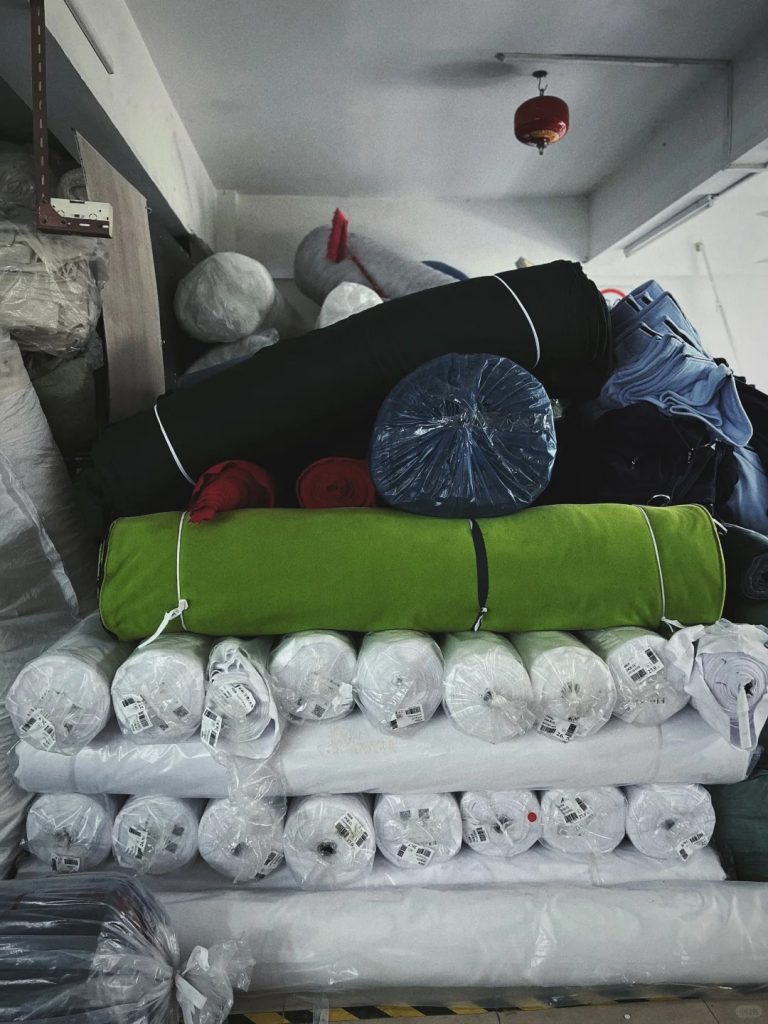
Specify composition, approximate weight, stretch and desired hand feel. A request for a cotton/polyester single jersey at approximately 155–165 GSM gives a sourcing direction, but available stock fabrics may differ in composition, weight or finish.
Confirm any substitute before buying sample fabric. If no elastane is required, state that explicitly; the knit construction may still provide stretch. Assess the physical sample for comfort, shape and the intended appearance after washing.
3. Test adjustable features as working mechanisms
A concealed releasable hem needs a clear plan for how it opens and how the extended garment is finished. An additional four centimeters on paper does not automatically become a clean, usable extension. Discuss whether opening the hem is a one-time change or a repeatable adjustment.
A fold-back cuff needs assessment in both positions. Its width, inner color, seam placement and print detail should work when folded and unfolded. Extra layers can alter bulk and comfort around the arm.
Need feedback on an adjustable hem or cuff? Email a detail drawing, or send the mechanism on WhatsApp: +86 13392371667, including how much length you want to add.
4. Approve printing and care expectations
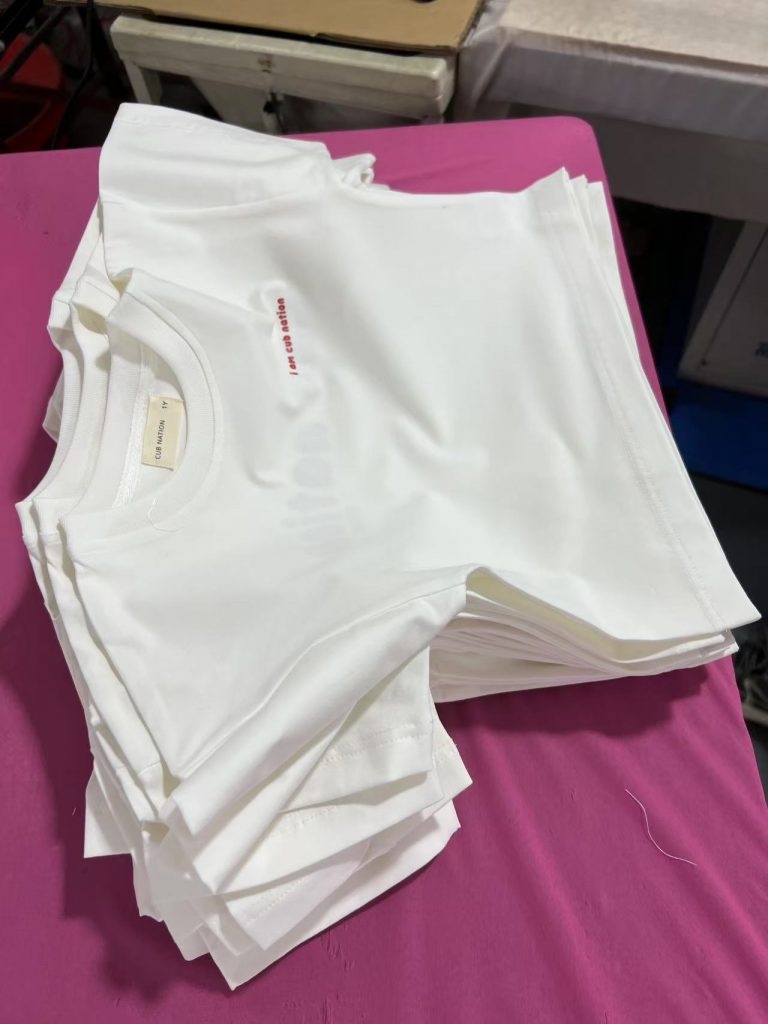
Send the original artwork, dimensions, colors and placement. “Soft water-based printing” describes a preferred effect, but suitability still depends on the fabric, artwork and printing process. A print test or sample lets you assess the feel and appearance before production.
Agree on care instructions and the checks needed for the intended use. Compare garment measurements before and after washing, inspect the print, and review seams and cuffs. A pre-shrunk fabric still needs evaluation in the actual garment.
5. Treat special finishes as separate requirements
Water repellency, soil release and anti-pilling requests need supplier confirmation. Availability, compatibility, minimum quantities and test documentation should be reviewed before they become product claims. A factory should not promise a named finish simply because a similar fabric is available.
Likewise, children’s clothing samples do not establish regulatory compliance by themselves. Identify the destination market and discuss any relevant testing with an appropriate laboratory or specialist as part of your development plan.
Have specific material or testing requirements? Email the requested specifications, or contact us on WhatsApp: +86 13392371667, so we can assess sourcing before sampling.
6. Record what is approved for bulk production
Keep an agreed specification covering measurements, fabric, print, construction and branding. List sample changes clearly, with photos and dimensions where useful. “Make the cuff neater” is less actionable than showing which seam should move and by how much.
The sample development order and bulk order have different purposes. A request for several prototypes across ages should be quoted as development work; it does not automatically meet a production MOQ. For Laiwen Clothing, children’s bulk quantities are commonly assessed around 100–150 pieces per style and color, subject to the design and materials.
A practical sample approval checklist
| Check | What to record |
|---|---|
| Fit | Sample size, measurements and wearing comments |
| Fabric | Composition, weight and approved material |
| Adjustable feature | Operation and finish in each position |
| Printing | Artwork, size, placement and sample result |
| Care test | Method and observed changes |
| Bulk specification | Final construction, labels and size breakdown |
Grading across ages: one sample does not fit all
A children’s collection usually covers several ages, and that is where sampling needs the most care. Age labels are useful for organizing a collection, but they are not a measurement specification. For each style, share the intended height range, the garment measurements, the fit preference, and the sample size — and explain whether the style should be close-fitting, relaxed, or oversized.
One approved sample size does not confirm every other size. The neckline, sleeve opening, and overall length must stay practical across the intended range, and a style that works at age 4 may need more than a scaled-up pattern at age 10. Agree on grading and any additional size checks before production, and budget for at least one more size sample if the range is wide. The sample fee for childrenswear is usually USD 40 per piece, and the exact fee is confirmed per style when you request a quote — a size check is cheaper than a bulk order graded from a single sample.
For bulk quantities, children’s styles follow the same per-style, per-color rule as womenswear: the minimum is 80–100 pieces per style per color, with some styles from 50 pieces. Send the style, the age range, and the full size breakdown, and the factory will confirm the minimum for that style.
Related: Low MOQ Garment Manufacturer · Clothing Production Cost: 7 Factors Behind Your Factory Quote
Wash and wear testing: check the garment, not just the fabric
A fabric can pass its own checks and still fail in the garment. For children’s clothing, agree on a care test before bulk approval: compare garment measurements before and after washing, inspect the print, and review seams and cuffs. A pre-shrunk fabric still needs evaluation in the actual garment, because construction — not just material — decides how a garment behaves after washing.
Test adjustable features in both positions. A fold-back cuff must work folded and unfolded, and a concealed hem extension must open cleanly without showing the original hem line or leaving stitch marks and creases. Test printing for feel and appearance after washing, not just on the day it is printed. And treat special finishes — water repellency, soil release, anti-pilling — as separate requirements: availability, compatibility, minimum quantities, and test documentation should be reviewed before they become product claims.
Children’s clothing samples do not establish regulatory compliance by themselves. Identify the destination market and discuss any relevant testing with an appropriate laboratory or specialist as part of your development plan, before bulk production is confirmed.
Related: OEM/ODM Service · Clothing Sample Development: 7 Steps After a Factory Visit
Working with Laiwen Clothing
Laiwen Clothing is a low-MOQ OEM/ODM garment manufacturer in Humen, Dongguan, making womenswear, childrenswear, and family wear for startups and small brands. Our minimum is 80–100 pieces per style per color, with some styles from 50 pieces; sampling usually takes 7–14 days and bulk production usually takes 4–5 weeks. For a kidswear sample, send your design, sample size, fabric specification, and intended bulk quantity to [email protected] or WhatsApp Lily on +86 13392371667, and we will review the practical development steps with you.
Related: Contact Laiwen Clothing
Frequently asked questions
Can you start with one children’s clothing prototype?
We can review a request for a first development sample. Fees and timing depend on the design, materials and tests required.
Can a T-shirt be extended without showing the original hem line?
That needs testing. Stitch marks, fabric creases and differences in appearance may remain after opening a hem.
Can stock fabric support a special finish?
Possibly, but the supplier needs to confirm availability and suitability. Do not assume the finish is included in a stock material.
Develop your kidswear sample with Laiwen Clothing
Start your sample review: Send the design, sample size, fabric specification and intended bulk quantity to [email protected], or WhatsApp +86 13392371667. We will review the practical development steps with you.
